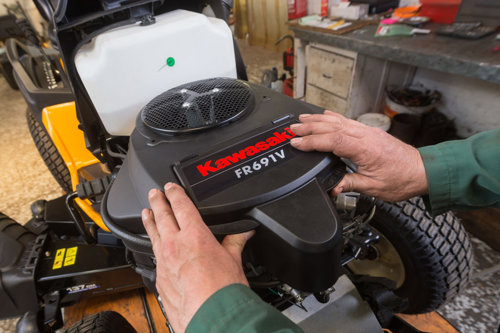
In this guide, Kawasaki Engines’ Technical & After Sales Specialist Dave Dunwoody explores why spark plugs have a big impact on engine performance, best practices to maintain them, and what a spark plug can tell you about your engine’s condition.

By Dave Dunwoody, Technical & After Sales Specialist at Kawasaki Engines
The spark plug may be small, but it plays a critical role. Positioned at the heart of the combustion process, it’s responsible for igniting the air-fuel mixture that powers your engine.
Without a properly functioning spark plug, performance quickly begins to decline. In more serious cases, issues such as misfires or pre-ignition can lead to significant engine damage, including burnt valves or even holes in the piston.
This is why spark plugs are a key maintenance component for professional landscapers, and choosing the correct genuine part is essential.
What does a spark plug do?
The primary function of a spark plug is to ignite the air-fuel mixture inside the combustion chamber under all operating conditions. To achieve this consistently, it must deliver a reliable spark while operating within a precise temperature range and withstanding high levels of pressure and heat.
When the spark plug is working correctly, the combustion process remains efficient, supporting smooth engine performance, consistent power, and optimal fuel use.
What happens if a spark plug isn’t performing correctly?
When a spark plug begins to wear or fails, the impact can vary depending on the severity of the issue.
A common problem is a misfire, which occurs when the spark does not properly jump across the electrode gap. This may be caused by an incorrect gap size, worn electrodes, or physical damage such as a cracked insulator. In practice, this often leads to slower acceleration, reduced power, and uneven engine performance.
A more serious issue is pre-ignition, where the air-fuel mixture ignites too early. This dramatically increases both temperature and pressure inside the cylinder and, in extreme cases, can result in severe internal damage, including melted pistons and burnt valves.
How often should you check your spark plug?
Maintenance intervals will always depend on the specific engine, so the owner’s manual should be your first point of reference.
As a general guideline, spark plugs should be checked and the gap adjusted every 50 hours of operation for two-stroke engines, and every 100 hours for four-stroke engines. In more demanding environments – such as high temperatures, or prolonged heavy use – more frequent checks are recommended to ensure optimal performance.
What a spark plug reveals about the engine
Effective maintenance begins with using the right tools. To remove a spark plug for inspection, a six-point deep socket in conjunction with the correct ratchet is recommended, typically 19 mm for two-stroke engines and 21 mm for four-stroke engines – and once removed, the spark plug can provide valuable insight into the condition of the engine.
A simple visual inspection may reveal signs of wear, deposits, or physical damage, all of which can indicate how effectively the combustion process is taking place. Learning to “read” a spark plug can provide valuable insight into how an engine is running and help prevent more serious issues.
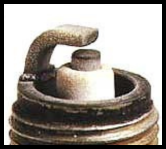
A spark plug in good condition will typically have a firing end that appears light grey or brown. This indicates that combustion is occurring correctly and that the spark plug is operating within its optimal range.
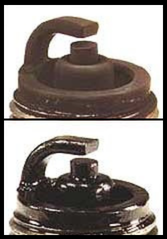
When deposits begin to build up, the appearance changes. A dry, matt black coating, known as dry fouling, often points to an overly rich air-fuel mixture, a clogged air filter, or a spark plug with a heat range that is too cold for the application. In contrast, wet fouling produces a darker, oily or fuel-soaked appearance, which may indicate oil entering the combustion chamber due to worn piston rings or valves, or severe engine flooding.
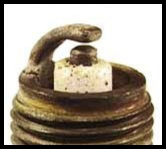
Overheating presents differently. In these cases, deposits on the insulator tip may melt, leaving behind a glazed or glossy surface. This is often a sign that the spark plug is operating beyond its intended temperature range, which can lead to further engine stress if not addressed.
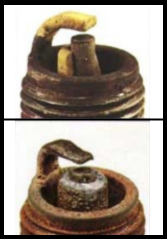
Physical damage is another warning sign. Cracks or breakage can occur due to the thermal shock caused by rapid heating and cooling cycles, or simply through long-term wear. Similarly, corrosion and oxidation may cause the electrode material to degrade, sometimes leaving a rough or even green-tinted surface when oxidation is advanced.
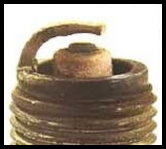
In more severe cases, abnormal erosion can occur. This is typically the result of oxidation and other corrosive chemical reactions within the combustion chamber, which gradually increase the gap between electrodes and reduce ignition efficiency.
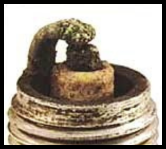
Lastly, spark plugs with partially melted electrodes that present a shiny, uneven surface can be a telltale sign of overheating and, if left unchecked, this issue may ultimately lead to catastrophic engine failure. If you are unsure, a quick side-by-side comparison with a new spark plug can help spot this issue.
Images: Niterra
Common mistakes when maintaining spark plugs
Even experienced professionals can occasionally overlook key maintenance best practices. Failing to replace spark plugs at the recommended intervals, setting an incorrect gap, overtightening during installation, or using an unsuitable spark plug type are all issues that can compromise performance and reliability.
A spark plug nearing the end of its lifespan will often show subtle warning signs before complete failure occurs. These may include difficulty starting, intermittent misfires, reduced engine power, or hesitation when increasing engine speed: addressing these symptoms early can help prevent more serious mechanical issues.
Genuine vs aftermarket spark plugs: what’s the difference?
Kawasaki engines are designed and tested using specific spark plugs, carefully selected based on the engine’s design, fuel and air mixture, operating temperatures, and performance requirements.
Aftermarket alternatives, even when produced by reputable suppliers, are not part of the original design specification. Usually, they are a mass-produced universal ‘will-fit’ plug. They may differ in heat range, material composition, or overall performance characteristics, which can affect how the engine operates over time.
Why is a genuine spark plug superior?
Using a genuine Kawasaki-approved spark plug ensures that the component is fully compatible with the engine’s design. This guarantees consistent ignition, efficient combustion, and reliable performance across a wide range of operating conditions.
In contrast, an unsuitable or lower-quality spark plug can lead to performance issues such as misfires, reduced power, or overheating. In more severe cases, it may contribute to engine damage, including failure of internal components.
Genuine parts also tend to offer greater durability, maintaining performance over a longer service life – while inferior alternatives may require more frequent replacement, making them a less economical choice in the long term.
For a more in-depth comparison, this article highlights the key differences between genuine and aftermarket parts, from performance to overall value and durability.
Performance in real-world conditions
Spark plugs play a vital role when it comes to starting reliability, particularly in challenging environments. With genuine spark plugs, engines are more likely to start consistently even in cold, warm, or damp conditions, as long as they operate within tested temperature ranges.
Naturally, harsh working conditions, such as exposure to dust and debris or extended periods of use, can affect overall engine performance. This is why regular maintenance is essential, and particular attention should be given to the air filter. Preventing contaminants from entering the combustion chamber helps protect both the spark plug and the engine itself.
Follow manufacturer guidance
While general recommendations are useful, it’s important to follow the specific maintenance schedule provided for your engine model. Regular inspection and timely replacement of spark plugs help ensure reliable starting, consistent performance, and reduced risk of unexpected failure.
Always be prepared for the unexpected
For professional landscapers, equipment reliability remains critical. An unexpected engine failure during a job can result in lost time, missed deadlines, and disruption to work schedules.
Keeping spare spark plugs and essential service parts readily available can significantly reduce downtime. Carrying basic diagnostic tools such as a spark tester can also help identify issues faster on site: even with high-quality equipment, components will wear over time, so preparation remains key to maintaining productivity.
Explore our blogs for more practical maintenance tips, and learn about the benefits of our genuine air filters or discover what makes our oil filters superior.
Need access to genuine parts? Find a Kawasaki Engines Authorised Dealer near you and keep your engine performing at its best.