Ever dreamed of a job that allows you to work outdoors, nurture nature, transform green spaces, and add real value to your community? Professional landscaping is an often overlooked career that enables you to do all that – and much more.
It's not just about planting flowers and mowing lawns. It combines art, science, and hands-on work to maintain outdoor environments of all sizes while also dealing with a wide range of variables such as shifting weather patterns, regional climate, pest infestations, and for those that run their own business, even managing client expectations or building a marketing plan.
In this blog, we'll explore the types of jobs available in landscaping, what makes it a good career choice, how to become a professional gardener, and why quality equipment is critical to setting you up for success.
Are there good landscaping career opportunities?
In 2024, we highlighted how labour shortages are impacting the landscaping sector across Europe. As this trend continues, it's time to take a closer look at the real opportunities the industry offers and address the misconceptions that might be keeping new talent away from a fulfilling career.
For instance, common myths we sometimes hear include:
- "It's just about mowing lawns."
- "There's no real skill involved."
- "It's mostly seasonal work."
- "It doesn't pay well."
- "It's not a job you can take pride in."
However, the reality is very different.
When in a recent survey we spoke with professional landscapers across Europe, we discovered that most of them are deeply satisfied with their job. The top reasons? "Working outdoors," "Satisfaction with a job well done," and "Being in touch with nature."
The psychological and physical benefits of this kind of career were also a welcome surprise: "On average, 61 percent of landscapers across the UK, France, Germany, and Italy said their job positively impacts their physical and/or mental health."
If you enjoy working outdoors, staying active, and seeing tangible results from your work, landscaping can be a rewarding career. Here are five compelling benefits of working in this industry.
Five benefits of working in landscaping
1. Variety and creativity
Each project presents new challenges and opportunities to be creative. One day you might be designing a serene garden for a family home; the next, you could be restoring a functional green space for an office complex or revitalising a public park.
If you value variety and enjoy working with both nature and design, this industry offers plenty of both.
2. Job stability
Landscaping services are increasingly in demand – especially as cities grow, sustainability becomes more important, and people invest more in their outdoor spaces.
The industry is also experiencing a significant labour shortage across Europe, meaning skilled workers are especially valued and opportunities are plentiful. And unlike many careers at risk of AI disruption, landscaping relies on hands-on work and expert judgment, making it far less likely to be automated anytime soon.
3. Career growth
Whether you start as an assistant gardener or volunteer, there are clear pathways for advancement. You can progress into landscape supervisor roles, specialise in areas such as arboriculture, turf management, or irrigation, or eventually branch out to start your own landscaping business.
There's real potential to build a sustainable long-term career with increasing responsibility and income. Self-employed professionals, in particular, can also enjoy greater freedom and flexibility – with the opportunity to choose the projects they’re passionate about and ultimately build a career that aligns with their preferred lifestyle.
4. Health and lifestyle
Landscaping allows you to enjoy a physically active life that keeps you moving, engaged, and outside in the fresh air. For those who dislike being stuck behind a desk or staring at a screen, this can be a welcome change.
As highlighted by our survey, many professionals in the industry report improved mental well-being thanks to regular outdoor activity and the satisfaction that comes from seeing a job well done.
5. A positive impact on the planet
Landscapers have a direct role in improving the world around them. From installing efficient irrigation systems to selecting pollinator-friendly plants and using sustainable materials, the work contributes to greener spaces and healthier ecosystems.
It's a profession where your daily tasks can have long-term environmental benefits – perfect for those who care about climate action and biodiversity.
How do you get into landscaping?
There isn't just a single, predefined route into landscaping. Many people enter the industry through hands-on experience – volunteering in community gardens, working part-time with a landscaping company, or taking on an apprenticeship. Others start from a personal passion for the outdoors.
For more ideas on how to get started, explore our six-step guide, where we share practical advice from an experienced landscaping pro.
Most employers in the industry value practical experience, specialist training, and work ethic above formal education. That said, certain roles – especially specialist or managerial positions – may require or benefit from specific training or qualifications. College courses in horticulture, arboriculture, or garden design can give you a competitive edge, as can certifications in machinery operation, health and safety, or pest control.
What do experienced landscapers wish they knew at the start?
Starting a landscaping career can be exciting, but also a little overwhelming. That's why, in our survey, we asked seasoned professionals across Europe to share the advice they'd give to someone just starting out in the industry.
Key takeaways from their answers include:
- Start smart, not big. "Walk before you run," advised one UK landscaper. Many recommend beginning with small projects, doing your financial planning carefully, and buying the best equipment you can afford.
- Invest in quality equipment. From the UK to Germany and Italy, many emphasised that reliable tools and protective gear are essential to improve your safety, productivity, and overall business reputation.
- Price wisely. Several professionals warned against undervaluing your work. "Always make estimates higher than the actual cost," said one French respondent. Another one recommends the same, stressing that "doing thorough research before starting" is essential to strike the right balance with your prices.
- Play the long game. German landscapers summed it up well: "Success is not luck." It takes time, consistency, and the ability to find enjoyment even in hard work. But for those who stick with it, the rewards are real.
- Stay passionate and professional. Across all countries, landscapers stressed the importance of self-discipline, patience, and professionalism. "If you love it, you'll be rewarded every day," said one Italian respondent. Another added: "Join this sector only if you like nature; plants don't like negative energy."

What landscaping jobs are available today?
Working in the landscaping industry offers a wide range of careers, allowing you to find the perfect role for your unique skill set and interests.
Here are some of the most in-demand roles today:
- Landscape gardener – the hands-on professionals responsible for planting, pruning, laying turf, and maintaining garden beds. They often work in both residential and commercial green spaces.
- Landscape designer – this creative role involves planning the layout of gardens, parks, and outdoor spaces. Designers choose plants, hardscape elements, and layout features that align with client needs and environmental considerations.
- Landscape architect – often requiring formal qualifications, these professionals take on large-scale landscape architecture projects like public parks, golf courses, and commercial developments. Their work blends design, ecology, and construction management.
- Arborist – also known as tree surgeons, they specialise in the care of trees, including pruning, disease treatment, and safe tree removal. This career often requires advanced training and certifications.
- Irrigation specialist – the specialised technicians who install and repair the watering systems, valves, and sprinkler technologies that keep landscapes healthy. This is a highly technical role requiring knowledge of hydraulics, soil science, plant water needs as well as lake and pond management best practices.
Fancy starting your own landscaping business?
Running a landscaping company can be incredibly rewarding, allowing you to choose your projects, lead a team, and grow a business that reflects your vision.
However, going solo also comes with new challenges. You'll need to handle marketing and branding, secure insurance, understand the legal requirements of your job, set fair prices, manage your time, and invest in the right equipment to deliver high-quality results consistently. It's about far more than plants and gardens – you become a manager, salesperson, and decision-maker all at once.
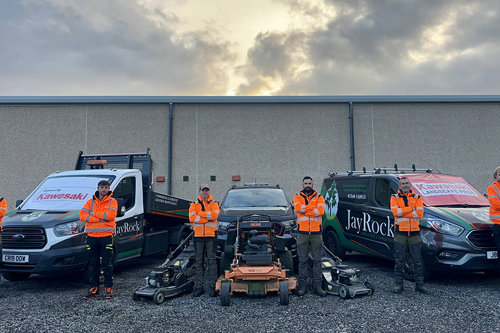
For practical insights on how to get started, check out our conversation with Sam Jarockyj, who successfully launched his landscaping business from scratch in 2020. He shares actionable tips and lessons learned from building a career on his own terms.
The importance of quality equipment
Even the most skilled gardener can't do a great job with subpar tools. Quality equipment directly impacts your efficiency, safety, and the final result of your work.
Equipment powered by Kawasaki engines offers the reliability, power, and efficiency that professional landscapers need to perform at their best. Known for their exceptional durability, these engines deliver consistent performance across demanding conditions, helping you to get the job done right first time and avoid costly downtime.
Explore our latest articles to learn more about careers in the industry, or discover how Kawasaki-powered equipment can help elevate your work and set your business apart.