If you've been running your landscaping business for a while, you'll know how rewarding it is to deliver beautiful results for homeowners and local residential clients. But at some point, many one-person businesses or small teams start asking the same question: what's next?
For a lot of landscapers, the natural next step to grow their business is winning commercial contracts. These larger-scale projects – ranging from maintaining office parks, retail service areas, and commercial properties to managing public green areas – can provide steady income, elevate your business profile, and open the door to sustainable long-term growth.
Here's a guide to help you prepare for and win commercial jobs – with practical advice and insights into the tools and strategies that will set you up for success in your target market.
Why pursue commercial grounds care contracts?
Before you even start to think about winning them, it's worth understanding why commercial grounds care jobs are particularly attractive in the first place compared to residential accounts:
- Consistent work – unlike seasonal residential jobs, commercial contracts often run year-round, providing predictable cash flow.
- Higher value projects – while residential jobs can be profitable, commercial contracts typically involve higher ticket values and recurring maintenance agreements.
- Business credibility – securing contracts with recognised companies or councils adds prestige to your business and builds trust with future clients.
- More room to grow – with the right contracts, you can expand your services, invest in better equipment, and hire additional staff.
That said, with bigger rewards come bigger responsibilities. Let's look at the steps to prepare and succeed as a commercial landscaping company.
1. Position your business to attract commercial work
When targeting commercial clients, your brand and professionalism need to match high expectations. Large businesses or councils want assurance that they're hiring a reliable partner who can meet deadlines and deliver quality consistently.
Elevate your marketing strategy
From your website to your workwear, ensure your business looks professional – with a consistent use of the company logo, colours, font and even written style, wherever clients encounter your brand.
A clean, modern website showcasing case studies, testimonials, and your grounds care services is essential to make a great first impression and build a reputable image. Today achieving all this is easier than ever thanks to website builders such as WordPress and Wix.
Don't forget SEO
Once you have a good website you'll want to implement some Search Engine Optimisation (SEO) best practices to rank high on Google or other search engines like Bing or Yahoo. These strategies include: keyword research, optimal page layout and loading times, smart use of metadata, and relevant backlinks.
For landscapers, local SEO can be particularly effective. By including keywords related to your service area, along with the services you offer, you increase the chances of appearing in searches from local clients. Be sure to complete a Google Business Profile as well with accurate details, photos, and verification steps (usually via phone or SMS) so customers can easily find and trust your business.
SEO can deliver recurring visitors and enquiries even with a small budget – but it's not a one-and-done task. To see consistent results, review your strategy regularly, keep your site updated, and continue building your online presence.
Use AI to save time and fill marketing gaps
AI tools are becoming increasingly useful for small landscaping businesses that want to improve their marketing without investing in professional services.
For instance, AI can assist with tasks such as writing website copy, generating social media post ideas, summarising customer reviews into testimonials, or helping you brainstorm blog topics that improve your SEO. You might also use AI to draft a service description for your LinkedIn profile page or to turn a recent landscaping project into a short case study for social media.
Used strategically, AI can help you maintain a professional online presence, attract new enquiries, and free up time so you can focus on delivering great work on site.
Stay active on social media
Social media is one of the most cost-effective ways to market your landscaping company and enhance your visibility and reputation. While you might already have a business profile on Facebook or Instagram to provide important updates – consider LinkedIn as a way of targeting a commercial audience.
Use a LinkedIn account to connect and interact with potential clients, answer their queries and demonstrate your expertise, celebrate success stories and personal connections, or simply showcase before/after photos of the projects you're particularly proud of.
And don't forget that consistency is key! Regular, professional posts will keep your business top of mind when clients are ready to choose a landscaper.
For more tips on how to leverage social media to grow your business, check out our ultimate guide to social media marketing for landscapers or explore new ideas for effective social media posts.
Use testimonials
When it comes to winning big ticket contracts, trust is the number one factor. Are you capable of meeting deadlines? Are you personable and reliable? Will you meet expected outcomes or go above and beyond?
Reviews, case studies, or testimonials from existing clients can reassure your prospects about your ability and trustworthiness. Whenever you're bidding on commercial accounts and you don't have a personal connection with any of the decision makers, reputable testimonials can make all the difference.

2. Impress potential clients with a compelling sales pitch
The bidding process for commercial accounts is very different from pricing a new contract for residential work. Commercial tenders require detailed proposals that often go beyond cost alone – with clients looking for professionalism, reliability, and the ability to handle large-scale, long-term projects.
For businesses keen to find commercial opportunities, checking official tender portals such as government procurement sites, local council websites, and sector-specific tender boards is a good starting point.
Here are some ways to set your company apart from the competition.
Conduct market research
Before you pitch, spend a good amount of time researching online to discover how many competitors operate in your area and learn more about their services, about local demand, and about the latest industry trends. You can also attend landscaping trade shows or similar industry events in your region to keep up with the latest technologies and understand how others position themselves.
These insights will help you identify new opportunities in the market and refine your pitch accordingly.
Ask for referrals
Word-of-mouth remains very powerful in commercial landscaping and can be one of the most persuasive tools in your marketing toolkit. The challenge is that referrals alone are rarely predictable, so they should complement – not replace – a broader marketing strategy.
Ignoring this opportunity, however, can mean missing out on work that is closer than you think: you never know the connections people might have! When you complete a project for a satisfied client, make it a habit to ask whether they could recommend you to relevant decision-makers such as property managers or facility directors that they might happen to know.
Alternatively, even connecting with someone in a smaller role at one of your target companies might set you apart from competitors and open the door to larger commercial opportunities.
Network strategically (and in advance)
Ensuring a successful bid isn't just about writing a compelling proposal: it's also about building relationships and being known and trusted before the tender is even issued.
Here are a few ideas on how you can achieve this:
- Join local business groups or industry events that may be attended by property managers, building owners, and other decision-makers who award commercial contracts.
- Build relationships with local business owners near you, such as builders, architects, and facility managers – they often need reliable landscapers to complement their own projects and may refer you when opportunities arise.
- Be visible online – as previously noted, LinkedIn is especially valuable for commercial contracts. Engage with property management companies, join relevant groups, and share professional updates to stay on their radar.
Networking isn't about pushing for a sale straight away, it's about planting seeds. Over time, these connections can turn into referrals, partnerships, and invitations to bid on the kinds of projects that elevate your business.
Explore the job site to understand your prospect's needs
Whenever possible, explore the property before submitting a bid. This allows you to understand the scope of work, spot potential challenges (such as drainage issues or access restrictions), and calculate a realistic price. Site visits also show clients that you're thorough and fully invested in their project.
Explain your landscaping services clearly
Break down exactly what your contract includes – such as lawn mowing, hedge trimming, planting, seasonal clean-ups, irrigation, or other ongoing maintenance work. At the same time, show flexibility by offering options for ad hoc requests; clients appreciate clear expectations and a partner who can adapt.
Be transparent and accurate with pricing
Pricing commercial work requires more research than residential contracts. Consider every factor – labour, materials costs, equipment wear, and your desired profit margins. Then leave a buffer for unexpected costs like bad weather delays or rising fuel prices. You should aim for accuracy, but without undervaluing your services.
As many experienced landscapers say: it's better to quote slightly higher and protect your business than to underbid and risk a loss.
Being accurate is particularly important as you don't want to quote too little and end up with a loss or quote too high and lose the bid. For more guidance and tips, explore our in-depth article on how to price landscaping jobs.
Highlight relevant experience and your expertise
Show clients why you're the right fit for their project. Share case studies, testimonials, or before/after photos of similar work. Even if your experience is mostly residential, emphasise transferable skills like reliability or efficiency, as well as alternative services you may offer such as design consultancy and hard landscaping: clients want to know they can trust you to deliver high-quality results.
Follow up
After submitting a bid, follow up with a polite email or call. Even if you don't land the contract, a professional follow-up keeps you front of mind for future opportunities. Commercial accounts are renewed periodically – so today's "no" could become tomorrow's "yes."
3. Invest in the right equipment
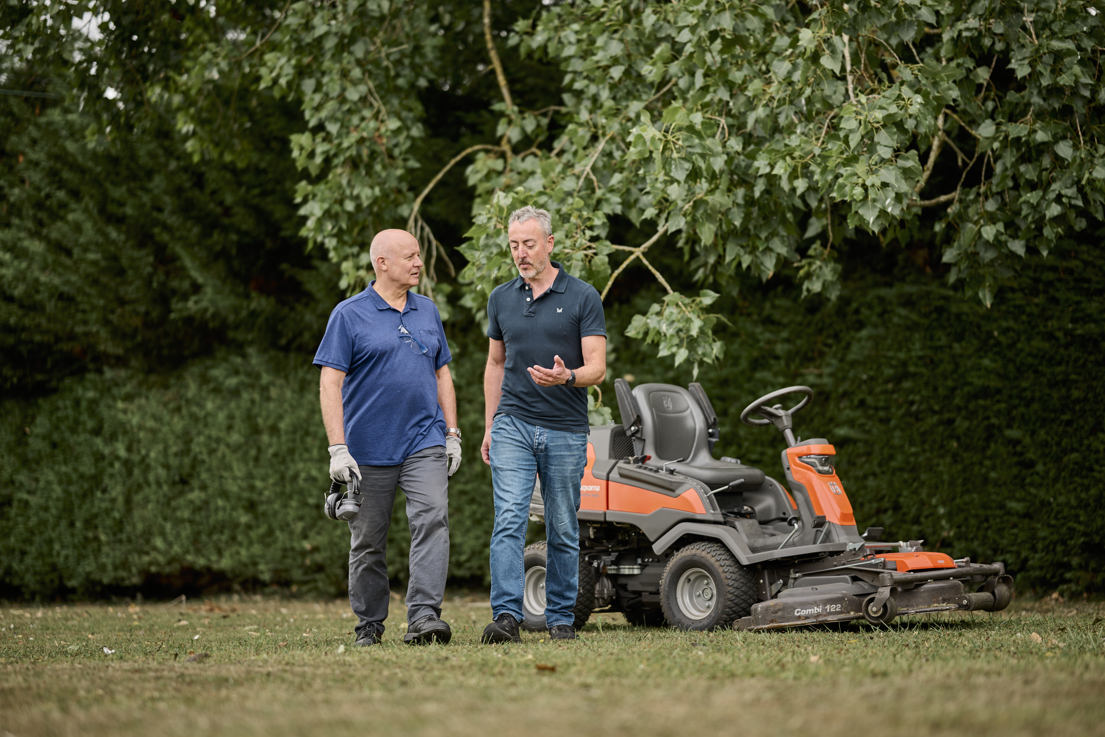
One of the biggest shifts when moving into commercial landscaping is the scale of projects. Larger sites will demand more efficiency and power from your machinery, as well as equipment you can always rely on.
Residential grade equipment simply won't cut it when you're maintaining vast areas of turf or working long hours every day.
Consider investing in new equipment, for instance:
- Commercial mowers – for wide areas, high-performance ride-on or zero-turn mowers will save significant time while maintaining high standards of cut.
- Handheld equipment such as brushcutters should be robust, reliable, and easy to maintain.
- Equipment Powered by Kawasaki engines, for example, provides consistent power and durability across a range of landscaping machines, helping you tackle heavy workloads without costly downtime.
Remember, equipment isn't just about getting the job done faster, it's also about presenting a professional image. Well-maintained, reliable machinery shows clients you take your work seriously and can be trusted to keep your promises and meet agreed deadlines.
4. Plan for recruitment and training
Winning a commercial contract often means expanding your workforce. However, leading a larger team might require developing a new range of soft skills as well as time-consuming training and staff management.
A few recruitment tips to keep in mind:
- Start small – you don't need to build a large team immediately; instead, hire carefully as your workload grows.
- Look for passion and reliability – skills can be taught, but a strong work ethic and enthusiasm for the outdoors are harder to find.
- Provide training – from machinery handling to health and safety, proper training ensures consistent standards and reduces safety risks.
Long-term, investing in your people's development and promoting a positive company culture will help you retain staff, improve client satisfaction, and create a team you can be proud of.
Are you considering hiring your first employee? Read our article to discover if your business is ready to take the leap.
5. Manage client relationships
Commercial clients often come with stricter expectations around communication, compliance, and performance.
Best practices to deal with commercial grounds care accounts include:
- Regular updates – keep clients informed with progress reports, schedules, and quick responses to queries.
- Write clear contracts – define scope, responsibilities, and payment terms clearly to avoid disputes.
- Stay consistent – delivering quality results on time, every time, is the best way to build long-term relationships.
Remember, one satisfied commercial client can lead to referrals and more contracts. Word of mouth still carries weight, even in corporate settings.
6. Don't overstretch
It's tempting to chase every opportunity, but scaling too quickly can overstretch your resources. Some landscapers warn against "running before you can walk."
Here are a few tips for sustainable growth:
- Start with manageable contracts that don’t require large investments in equipment and people before taking on larger ones.
- Keep a close eye on finances to ensure revenue covers all labour, equipment, and overheads.
- Reinvest profits into equipment upgrades and staff training.
- Always maintain quality and don't let growth compromise your standards.
The goal isn't just to win one big contract, but to build a reputation as a reliable, professional partner for the long term. Overstretching risks depleting your resources and harming your reputation.
The importance of using high-quality equipment
Winning commercial grounds care accounts can transform your business – bringing in steady revenue, boosting your reputation, and opening the door to long-term growth. But it requires careful preparation and investing in the right type of resources and equipment.
Reliable, powerful equipment – such as machinery Powered by Kawasaki – helps you handle demanding workloads efficiently, minimise the risk of downtime, and get the job done faster and better. This way, you can consistently deliver results that impress clients and stand out in a competitive commercial landscaping market.
Ready to take the next step? Explore our latest insights and discover how Kawasaki-powered equipment can support your journey to winning and managing commercial landscaping contracts.