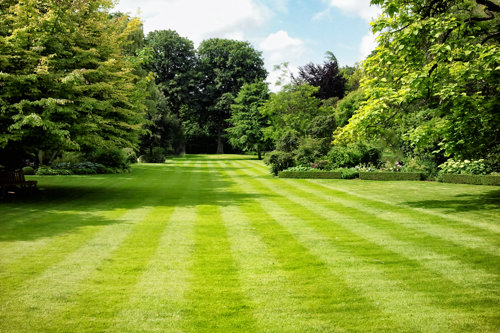
Top dressing a lawn involves applying a thin, even layer of suitable material over existing grass to help improve the surface, soil structure, and growing conditions. Depending on the lawn and the reason for treatment, lawn top dressing can level minor uneven areas, improve drainage, support healthy grass growth, and form part of a wider renovation programme alongside aeration and overseeding.
If you're new to professional landscaping, or looking to refresh your knowledge, top dressing is a useful technique to understand. Experienced professionals will be familiar with the principles, but knowing why, when, and how to top dress can help newcomers make better decisions for different sites and conditions.
In this guide, we'll cover the fundamentals of top dressing, including choosing the right material, applying it correctly, overseeding turf, and adapting your approach to conditions across Europe.
What is lawn top dressing?
Lawn top dressing is the simple but effective process of spreading a thin layer of sand, loam, organic matter – or a mixture of all three – over an existing lawn.
Rather than sitting as a thick new layer on top of the grass, the dressing should work down between the grass leaf and integrate with the lawn surface and upper root zone. The exact material used will depend on what you're trying to achieve and the existing soil beneath the turf. But more on that later.
What are the benefits of top dressing a lawn?
Used appropriately, top dressing can form a valuable part of an ongoing lawn maintenance programme, helping to:
- Improve soil structure – adding a compatible dressing over time can improve conditions around the grass roots.
- Support renovation and overseeding – top dressing can help create good seed-to-soil contact when new grass seed is being introduced.
- Level out minor uneven areas – lawn dressing can gradually fill small hollows and imperfections to create a more consistent lawn surface.
- Boost drainage – where suitable, a sand-based dressing can help water move through the surface when combined with aeration.
- Encourage recovery after aeration – worked into aeration holes, it can improve conditions within compacted soil.
- Contribute to the lawn's appearance – repeated light treatments create a smoother, more even surface.
The important point is that top dressing is not a cure for every lawn problem; persistent waterlogging, severe compaction, poor soil, or significant uneven surfaces may need additional remedial work. For more advice on tackling common lawn problems such as compaction, drainage and waterlogging, see our library of online guides.
When should you top dress a lawn?
Typically, the best time to top dress is when the grass is actively growing, and conditions allow it to recover from the work. For cooler parts of Europe, early autumn is often the best window. At this time of year, soil temperatures are generally still suitable for growth; the cooler days and wetter nights also help grass recover after the heat of summer.
The Royal Horticultural Society (RHS) identifies September and October as a good period for autumn lawn maintenance in the UK, with the milder, damper conditions typically helping grass recover before winter.
Can you top dress in spring instead of early autumn?
Spring can be a good opportunity once the grass is actively growing again. The exact timing will depend on weather and soil conditions. It's worth pointing out here that applying lawn top dressing while growth is slow, the soil is saturated, and when there is an increased likelihood of cold spells, can make recovery more difficult.
As is always the case, whatever the season, work with the conditions in front of you rather than following the calendar alone.
Does the best time to top dress vary across Europe?
The principles of top dressing remain broadly the same, but the best working window will vary according to climate, rainfall, temperature, grass species, and soil conditions.
In cooler, wetter areas of northern and western Europe, excess rainfall and saturated soils can be as important a consideration as drought. Spring and early autumn can provide useful windows when grass is growing strongly but conditions are not too extreme. Central parts of Europe can experience colder winters and hotter summers, creating a smaller window between periods of slow growth and heat stress.
Further south, including the Mediterranean and parts of Spain, Portugal, Italy, and southern France, high summer temperatures and prolonged dry spells can make early autumn top dressing unsuitable unless the turf, irrigation, and local growing conditions support it.
When to avoid top dressing
Experienced landscapers will generally avoid applying top dressing when:
- The lawn is waterlogged.
- The ground is frozen.
- Grass is dormant or growing very slowly.
- The lawn is suffering significant drought or heat stress.
- Very heavy rain is likely to wash newly applied material away.
A relatively dry lawn and workable dressing material will make it easier to spread evenly. Wet dressing applied to wet grass can become clumpy and difficult to work into the surface, so isn't recommended.
Choosing the right top dressing material
The best top dressing material is one that's compatible with the existing soil and suited to the outcome you're trying to achieve. Common components include sand, loam, and compost or other decomposed organic matter. Let's take a look at the options.
Using sand to improve drainage
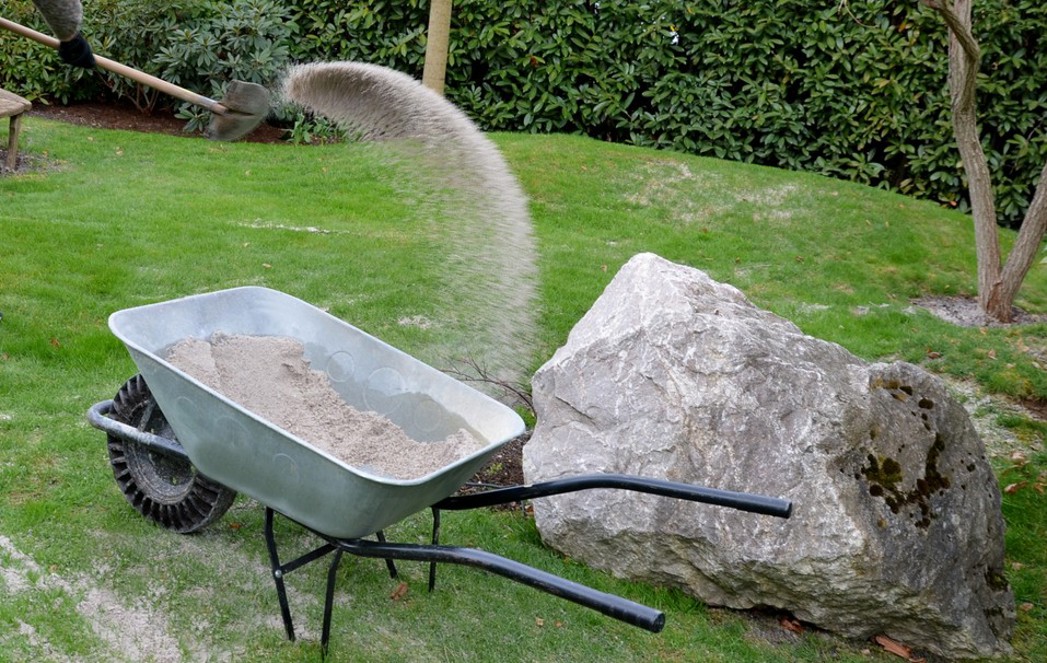
Sand is commonly used where the aim is to improve surface drainage or work material into aeration holes. This can be useful on heavier or compacted soil, but adding the wrong type of sand or creating very different layers within the soil profile can cause problems rather than solve them. You should always use material intended for turf or soil applications rather than, say, building sand.
Using loam for structure and levelling
Loam gives a top dressing mixture more body, making it very useful for general surface improvement and levelling. But once more, compatibility matters – if the material isn't suitable for the existing root zone, then it may integrate poorly.
Adding compost and organic matter
Decomposed compost can add organic matter and nutrients to the surface and support soil health and moisture retention. However, compost-rich dressing is not the right option for every lawn. For example, when the lawn sits on heavy, poorly draining clay soil, or when you are trying to level deep dips or bumps: consider the existing soil, drainage, and the purpose of the treatment before deciding on the mixture.
Matching the top dressing mix to the lawn
A 70% sand and 30% loam mixture is frequently recommended as a lawn top dressing, but it shouldn't be treated as universal. A high-quality top dressing should be selected on a site-by-site basis, which can itself be informed by soil testing.
How to top dress a lawn: your step-by-step guide
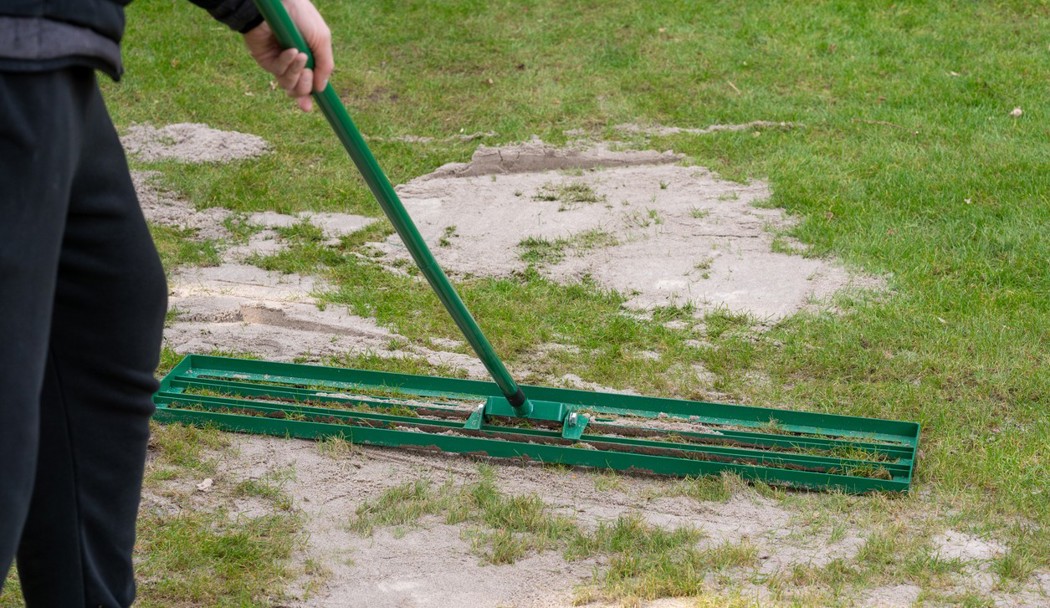
Top dressing should normally be applied lightly enough that the existing grass remains visible. For general lawn care, an application rate of around 2–3 kg per square metre is recommended. Landscapers should work material into the surface with the back of a rake or a broom for smaller areas, or with an attachment to a garden or lawn tractor and a drag mat for larger spaces; if initially a large amount remains sitting on the surface, then less material should be used.
Applying too much top dressing at once can bury the grass leaf, which can then restrict new growth and smother areas of the lawn. Several lighter applications are preferable when trying to correct significant differences in the level of the turf.
Still not sure? Read on for our step-by-step guide to top dressing.
1. Assess the lawn
Before reaching for a shovel, establish why you're top dressing. You will want to consider the following:
- Uneven areas
- Turf density
- Drainage
- Compacted soil
- Thatch or weeds
- Bare or thinning areas
- Existing soil conditions
- Review your climate conditions
Doing so will determine the material to use and whether other work, such as scarification, aeration, or overseeding, should be carried out at the same time.
2. Mow the lawn
Mowing before top dressing makes it easier for the material to reach the soil surface rather than being held up by long grass. It's best practice to cut turf reasonably short, without scalping it; removing excessive grass clippings can also make the following stages easier.
3. Scarify where necessary
Scarifying turf removes excess thatch and dead organic material that can sit between the green growth and soil surface. But you should always assess the condition of the lawn first rather than adding unnecessary stress to healthy turf.
4. Aerate compacted areas
Aeration can be particularly valuable where the soil has become compacted: creating openings in the soil improves movement of water and air around the grass roots, while also providing channels into which suitable dressing material can be worked.
5. Apply the top dressing
Work methodically across the site, distributing small amounts of dressing rather than creating large piles that are difficult to spread. For smaller lawns, a shovel may be enough to distribute the material before raking; larger areas may justify dedicated spreading equipment, which you can learn about later on in the article.
6. Work the dressing into the turf
Use the back of a rake, lute, broom, or stiff brush to work the material down between the grass blades, or a drag mat or drag brush if required. Continue until the dressing is integrated into the surface rather than sitting visibly on top of the grass. Always take extra care around uneven areas.
7. Overseed if required
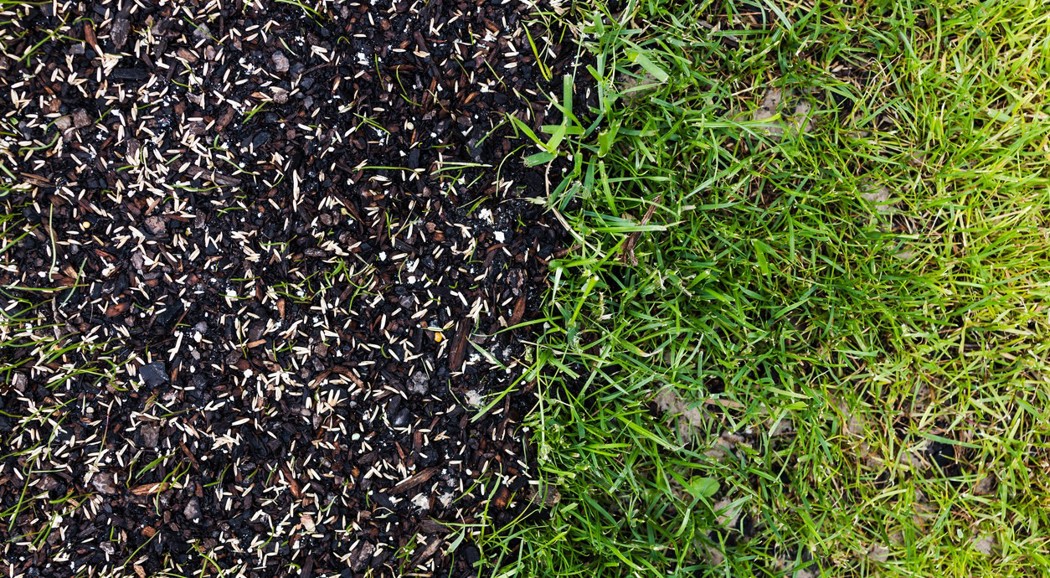
If the lawn is thin, worn, or undergoing renovation, overseeding with new grass seed can help. Good contact with the soil is important for establishment, which is why overseeding is frequently combined with top dressing and aeration. See our FAQs below to learn more about overseeding.
8. Water and allow the lawn to recover
If natural rainfall isn't expected, watering may be necessary after the dressing is applied, especially where grass seed has also been sown. It's also advised to reduce unnecessary traffic while new grass establishes and avoid returning immediately to an intensive mowing regime.
The best equipment for top dressing
Getting these top dressing fundamentals right is important, but so is having the right equipment. For bigger jobs, using powered machinery that can help you prepare the lawn properly can save time and improve final results.
Aerating can help relieve compaction and create channels for water and air to reach the roots, while scarifying removes excess thatch and dead material from the surface. Both can be useful preparation steps before overseeding and top dressing – particularly when you're working on larger areas where doing the job by hand isn't practical. That's where the versatility of a garden tractor can make all the difference.
Kawasaki-powered garden and lawn tractors can be fitted with useful attachments, including scarifiers, aerators, and top dressing spreaders, helping you take on a wider range of lawn care jobs with one machine. Manufacturers in our Powered by Kawasaki range include Husqvarna, Etesia, Toro, Ariens, and John Deere, giving professional landscapers plenty of options to find the right equipment for their workload.
Helping landscapers get top dressing right
By following this guide, top dressing can become a valuable part of your wider lawn maintenance programme, helping support a more even surface, stronger growing conditions, and better long-term lawn health.
Explore more professional landscaping advice and equipment Powered by Kawasaki from Kawasaki Engines Europe, starting with our news section including the latest lawn care tips and advice.