
1 Dec 2025
Kawasaki Engines: why we’re known for reliability
We know how much our landscaping community depends on their equipment.


Your reputation depends on delivering work that meets your own high standards – and that takes more than skill alone. The quality of your equipment plays an equally important role.
Professional landscapers need reliable power and dependable performance. Here's why Kawasaki engines offer that in abundance.
Investing in your equipment comes with a series of boxes to tick: will it perform to the level I need, handle whatever I ask of it – for as long as I need it to?
Longevity is a clear marker of quality. A machine built – and maintained – well will perform at the highest level from the first hour to the 1,000th.
Kawasaki Engines has been powering landscaping equipment for over 65 years. In all that time, we’ve never cut corners on quality. It's how we earn respect from professionals: the proof is in long-term performance.
How do we make sure our engines maintain this consistent reputation? By steadfastly adhering to the following principles.
Landscaping can be intensive – and the demand on the engine high. That’s why we use materials selected purposefully for the task at hand.
Durability is integral to every component. From crankshafts that contain forge-quality cast iron – with high compressive strength – to high-pressure die-cast crankcases and cylinder heads using automotive-grade aluminium, every part is ready for the intensity of extended professional use.
Manufacturing needs to be meticulous for guaranteed quality. Countless checks and balances are required to keep standards consistently high.
In our manufacturing plant in Maryville, USA, and at our Boonville facility, a highly skilled workforce is dedicated to producing engines that last. It’s a matter of pride here at Kawasaki.
Employees on the line constantly perform checks, incoming parts go through thorough strict quality control, and the machinery used during manufacture faces similar scrutiny. Working closely together, our quality assessors and research and development departments constantly work to improve the performance of our engines.
No stone is left unturned in making sure every engine meets specification. To guarantee you receive the quality you expect, every one of our engines is test-run before it leaves the factory.
Quality starts with design. Built for the professional, our engines are made to maximise performance – we don’t ‘engineer-down’ or use inferior materials to cut costs.
Every component is carefully designed to enhance power, efficiency, and longevity. In our V-twins, high specification oil filters and air filters prevent particulate debris from entering the engine, and several vital features, such as our high-performance lubrication system, are meticulously engineered to extend engine life and improve performance.
From the finish of your cut to simply being dependable, quality equipment is an investment in your business that pays long-term.
Our commitment to quality doesn’t stop when your engine leaves the factory. How you treat your engine plays a big part in how long it will last. We want to help the power behind your equipment go the distance.
From high-quality genuine parts and maintenance advice to a 50-year back catalogue of technical information available online, we provide lasting support you can trust – whether you’ve had your engine for days or decades.
We’ve always manufactured engines with the professional landscaper in mind. For quality your business can rely on, explore Powered by Kawasaki equipment today.
We know how much our landscaping community depends on their equipment.

When you’re in the thick of a hectic schedule, with multiple sites to fit in and long hours of cutting ahead of you, only one thing matters – your ability to power through.
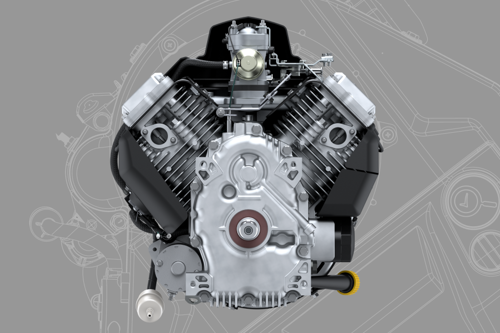
Have you ever wondered what makes an engine Kawasaki quality? Or what the difference is between a reliable engine, and one that lets you down?
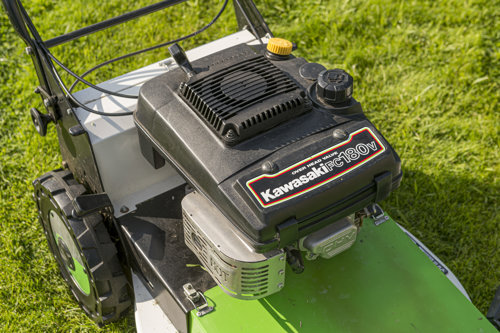
In the demanding world of professional landscaping, the reliability and longevity of your equipment are paramount. Extra repair costs, unnecessary downtime and, ultimately, a hit to your bottom line can all result from purchasing machinery that's not fit for professional-level work.