
1 Dec 2025
Kawasaki Engines: why we’re known for reliability
We know how much our landscaping community depends on their equipment.


When you’re in the thick of a hectic schedule, with multiple sites to fit in and long hours of cutting ahead of you, only one thing matters – your ability to power through.
That’s exactly what Kawasaki engines are built for. For decades, we’ve designed engines for professionals, making sure the heart of your machinery can thrive in even the most demanding conditions.
This is how we’ve established a reputation for power that delivers without question.
Landscapers already know the answer – power can be the difference between a clean cut and a job cut short.
Your equipment is only as good as the engine powering it: a Kawasaki engine allows you to glide through tough turf or brush with ease.
We make engines for the professional landscaper, ready for any task you’ll face.
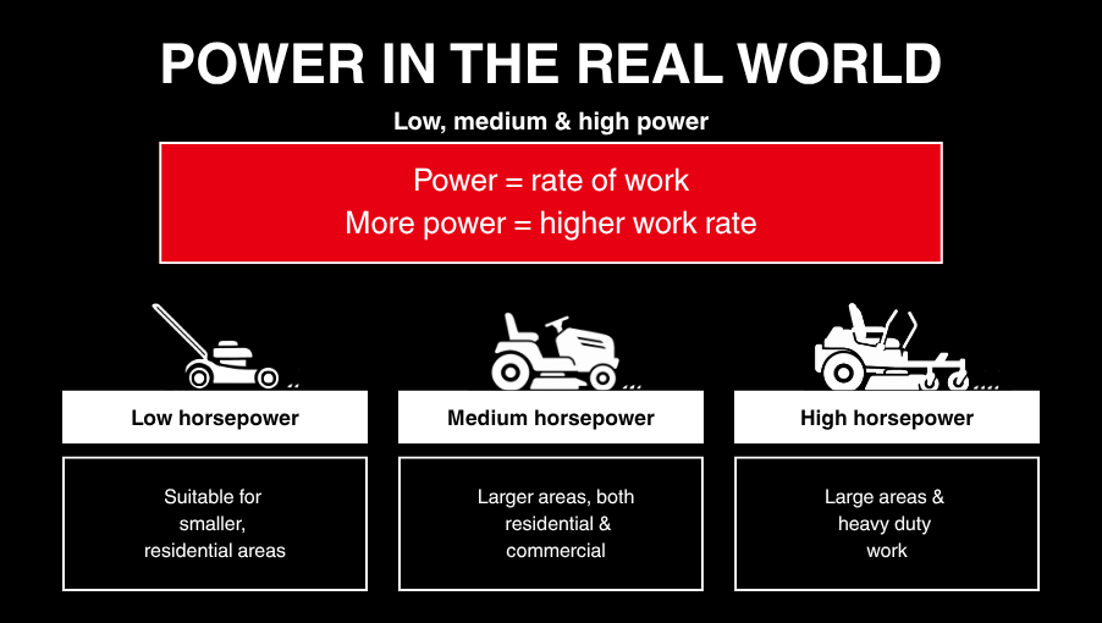
Power must be paired with the work at hand. If you’re cutting large grounds, you’ll need more power to match output – if you’re cutting a small garden, a larger engine isn’t economical. As our application engineer at Kawasaki Engines EU, Alan Lunn, suggests, ‘It’s about matching power to the application. A very large engine would be overkill for very small spaces, requiring more fuel and adding weight – but if you’re working commercially, that more heavy-duty power is needed.”
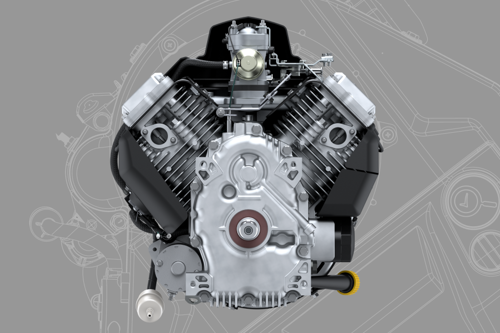
Our 2-stroke or 4-stroke engines are engineered to perform to the level professionals need. Each of our V-twin engine series – FR, FS, FX, and FT – is built for different levels of demand. Our FX series includes our most powerful engines, able to keep up with an intensive, heavy-duty commercial workload.
Of our 2-stroke engines, the TJ53E is the most powerful, with 40% greater maximum power than the TJ45E. It's designed for professionals who are working in the toughest conditions, clearing dense brush and large areas of thick overgrowth.
Every aspect of our engines is considered and measured; efficiency, weight, regulatory compliance are all vital. In a powerful lawn mower engine, a careful balance is required. For example, in our V-twin engines, spherical combustion chambers and overhead V-valves are designed to maximise power output, while remaining fuel efficient, and many components are made of materials that are both lightweight and robust.
We do everything we can to maximise power in our engines for their respective workloads. Ultimately, as Alan states, it’s about, “Having the right engine for the right job.”
In a combustion engine, power is generated from the Otto cycle: intake, compression, ignition, and exhaust.
Intake occurs as the piston comes down the cylinder, the intake valves open and the negative pressure draws a fuel air mixture into the cylinder. The intake valves are closed and the piston rises up the cylinder, compressing the fuel air mixture. At a point before the piston reaches the top of its stroke, the fuel air mixture is ignited by the spark plug. This is timed so that the maximum pressure from the combustion process is converted into the downward movement of the piston. Finally, as the piston returns up the cylinder, the exhaust valve is opened and the hot exhaust gases are expelled, completing the 4 cycles.
For landscaping applications, engineers have to consider all characteristics of the engine design to ensure the optimal balance between power and torque that are required for the application – torque being the turning force of the crankshaft, and power being the rate at which that work is done.
“Lawnmower engines try to maintain peak power, however long grass requires more torque – when you’re also dealing with inclines and sharp turns, less power is immediately available for the cut. This is where our Electronic Fuel Injection (EFI) engines come into play”, Alan explains.
In our EFI engines, the integrated electronic throttle control continuously matches power to load, maintaining a steady engine RPM irrespective of conditions such as movement into thick grass or up a slope.
We don’t overstate the performance of Kawasaki engines. We know fine margins are critical, so we give professionals a realistic understanding of how their engine will perform in real-world applications.
This is tested on a production engine and measured in accordance with SAE J1349 – an independent, third-party verification by SAE-confirmed expert witnesses, designed to make sure an engine delivers at its advertised performance. These tests measure an engine’s net horsepower to provide accurate data.
Power output does, of course, vary according to factors such as environmental conditions and maintenance, but with Powered by Kawasaki equipment, you know what to expect from your engine: reliable, consistent performance.
Level up your fleet with Powered by Kawasaki equipment. Paired with equipment from leading manufacturers, a Kawasaki engine gives you the confidence to tackle any job.
Explore Powered by Kawasaki equipment today.
We know how much our landscaping community depends on their equipment.
Have you ever wondered what makes an engine Kawasaki quality? Or what the difference is between a reliable engine, and one that lets you down?

Alan Lunn, application engineer at Kawasaki Engines EU, is responsible for the smooth integration of engine and equipment. He explains the process and the challenges involved, and reveals how Kawasaki works with manufacturers to guarantee quality.

Looking for equipment that will take your business to the next level? From a productivity boost to improved cutting performance, the right machinery can give you an edge over the competition.