This guide explains what fertilisers are, the different types available, how to choose the right one, what NPK ratios mean, and how season and climate can affect your feeding programme.
From mowing and irrigation to aeration and top dressing, professional landscapers know that maintaining a healthy lawn takes plenty of hard work. However, none of these efforts can replace the nutrients that grass naturally removes from the soil as it grows. Every time clippings are collected precious nutrients leave the site, and over time the soil's natural reserves get depleted.
Fertiliser helps replenish those nutrients, promoting lush lawns, healthier root growth, and more resilient turf throughout the year, but selecting the right product is far from simple. Landscapers must consider everything from soil conditions and grass species to seasonal growth patterns and the intended use of the turf.
In this guide, we'll explain how professionals choose fertilisers, what the NPK numbers actually mean, and how feeding programmes should change throughout the year to deliver consistently high-quality results.
What counts as fertiliser or lawn feed?
In landscaping, you'll often hear the terms "lawn feed," "plant food," and "fertiliser" used interchangeably; they all refer to supplying the key nutrients that grass absorbs from the soil over time.
Fertilisers are generally divided into two broad categories: organic and synthetic (or mineral).
Organic fertilisers are derived from natural materials such as compost, bone meal, seaweed, manure, or plant-based matter – which means their nutritional content may vary slightly between applications, while also containing traces of beneficial minerals such as calcium, magnesium, and sulphur. Because nutrients are released gradually as these materials break down, they can improve soil structure while helping plants to grow strong.
Synthetic fertilisers, meanwhile, contain carefully formulated ratios of nutrients, allowing landscapers to deliver more predictable results whenever a deficiency is spotted. They are widely used across commercial landscapes, sports turf, and amenity areas, where aesthetics and an accurate application of nutrients are essential.
Neither approach is inherently better than the other. Many landscapers use a combination of both, selecting products according to the lawn's needs, the time of year, and the desired results.
Why does turf need fertiliser?
Grass is constantly growing and replacing damaged tissue. To do this effectively, it requires a regular supply of essential nutrients.
Natural soils contain many of these nutrients, but they gradually deplete through plant uptake, rainfall, and routine maintenance. Frequent use of a mower can also accelerate this process, particularly when grass clippings are collected and removed rather than returned to the lawn.
Without adequate nutrition, turf may begin to lose colour and turn brown, thin out and form bare patches, recover more slowly from wear, and become less resilient to drought, disease and environmental stress.

Understanding NPK: what do the numbers mean?
In addition to oxygen, carbon, and hydrogen, which are absorbed naturally from the air and water, plants need three key nutrients to thrive: nitrogen (N), phosphorus (P), and potassium (K) – which are more scarce and can deplete over time.
These are provided in standard lawn feed and are the reason why every fertiliser bag displays three numbers, such as 4-1.5-3. They represent the relative amounts of nitrogen, phosphorus and potassium in the product, helping landscapers understand what type of nutritional support the fertiliser is designed to provide.
Nitrogen (N)
Nitrogen promotes green leafy growth, producing that rich green colour associated with healthy turf. It also supports recovery after mowing and periods of heavy use.
Too little nitrogen results in pale, slow-growing grass, while excessive applications can encourage lush growth that requires more regular mowing and make the lawn more susceptible to disease – especially in the winter months when abundant leafy growth may be damaged by the harsh weather.
Phosphorus (P)
Phosphorus is particularly important for root development. It plays a vital role in helping establish a new lawn, overseeding, and turf recovery following renovation work, helping young outdoor plants develop a strong root system.
Potassium (K)
Potassium improves the plant's ability to withstand stress. It helps strengthen cell walls, improves tolerance to dry weather during the hottest months of spring and summer, and contributes to greater resilience against disease and wear in winter.
Choosing the right lawn fertiliser
The NPK numbers are important, but rather than selecting fertilisers based solely on the label, professional landscapers must assess the needs of both the turf and the soil.
Professionals will consider things such as:
- The season
- Soil type
- Grass species
- Expected levels of wear
- Previous maintenance practices
- Soil nutrient levels
This is why, whenever possible, the soil of a lawn should be analysed to make more informed decisions about what feed to use from the start. Testing helps identify nutrient deficiencies, soil pH, and organic matter levels, allowing fertiliser programmes to be tailored to the actual requirements of that lawn.
In many cases, soil testing can also reduce overall costs by preventing unnecessary feed applications and ensuring nutrients are applied where they are genuinely needed. For instance, acid-loving plants will need fertilisers made for low pH conditions while more regular feeding may be necessary for sandy soils where nutrients are more prone to leach away.
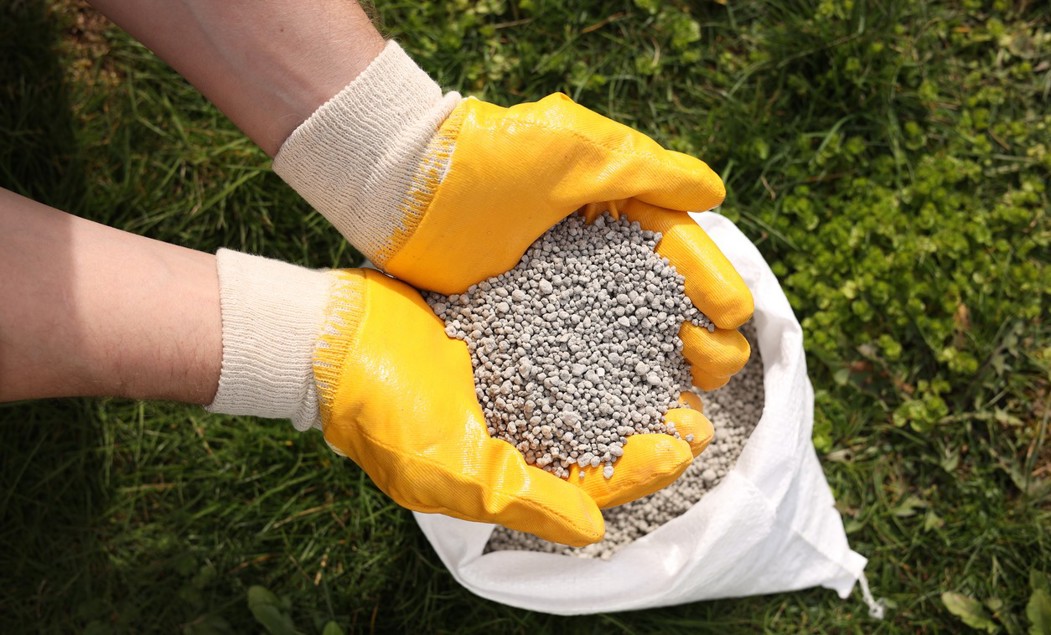
New lawns
New lawns benefit from starter fertilisers that contain relatively higher levels of phosphorus to encourage rapid root establishment.
Strong early root growth helps young grass become established more quickly and improves long-term resilience.
Established lawns
Most existing lawns perform best with balanced, general-purpose fertilisers that provide steady growth without excessive leaf production.
The goal is consistent density, colour, and healthy root development throughout the growing season.
Sports turf
Sports pitches, golf courses, and other intensively managed surfaces have much greater nutritional demands due to frequent mowing, regular watering, heavy traffic, and rapid recovery requirements.
These surfaces often require the use of nitrogen-rich fertilisers or more focused applications of fast acting feed in those areas of the turf that are particularly damaged and are struggling to heal.
Commercial landscapes
For commercial grounds, large lawns, and public spaces, choosing the right fertiliser often involves carefully balancing your presentation goals with the maintenance budget.
That's why fertiliser specially designed for slow nutrient release can be very useful, helping maintain healthy, beautiful turf while reducing the frequency (and the cost) of feed application across a vast area.
Recovery after lawn maintenance
Practices such as aeration , scarification, or close mowing are essential to relieve compaction, mitigate thatch build up, or obtain a beautiful manicured finish. However, the same processes will also place undue stress on the turf surface.
If the lawn is particularly damaged after routine maintenance it may benefit from fertilisers with a balanced blend of nitrogen and potassium to support both a leafy top growth and the recovery of damaged roots.
What types of lawn feed should I use?
Not all fertilisers are created equal. Let's explore the main types and what they're commonly used for.
Slow-release vs fast-acting fertilisers
Both slow-release and fast-acting fertilisers have their place in professional turfcare.
Slow-release products return nutrients gradually over several weeks or months, supporting steady growth while reducing the need for frequent applications and the risk of nutrient burn. They're a good choice for a routine maintenance programme, which must provide a continuous supply of nutrients.
Fast-acting fertilisers, on the other hand, deliver nutrients more quickly. They're useful when turf needs a rapid green-up, has suffered stress, or needs to recover quickly after renovation works. They can also be useful when preparing high-profile areas for an important event.
In practice, professional landscapers may use both: slow-release fertiliser for ongoing nutrition, with fast-acting products brought in when the turf needs a quicker boost.
The risk of nutrient burn
More fertiliser doesn't necessarily mean healthier grass. Applying too much feed, particularly fast-acting fertiliser, can cause a build-up of salts around the roots and result in what is known as nutrient burn.
This phenomenon can dehydrate the lawn, leaving it looking yellow or brown rather than green and healthy.
Granular vs liquid fertilisers
Again, there's no one-size-fits-all solution. Granular fertilisers are often used for routine turf maintenance because they’re straightforward to apply, cost-effective, and well suited to covering larger areas and feeding the whole lawn evenly. Slow-release granular products, in particular, are a popular choice to provide a steady supply of nutrients over an extended period.
Liquid fertilisers, on the other hand, are absorbed more quickly and are ideal when a lawn needs a rapid intake of nutrients, such as correcting a deficiency or promoting recovery on high-traffic turf surfaces.
For many professional landscapers, the best approach is to use both methods, selecting the right one based on soil type, season, and desired result.

When to feed the lawn
Timing is just as important as choosing the right fertiliser. For many lawns, spring and early autumn are key feeding periods, although commercial turf may require more frequent applications depending on its grass species and level of wear.
Spring feeding, from late March to early May, should focus on encouraging healthy growth as the grass emerges from winter dormancy. For this purpose, a nitrogen-rich fertiliser can support fresh leafy growth and help the lawn recover faster.
Early autumn is another important feeding window. As temperatures begin to fall, the focus should shift towards strengthening the roots and preparing the turf for the upcoming winter. Fertilisers with relatively less nitrogen and more potassium can help support resilience without encouraging excessive leafy growth that may be more vulnerable to harsh winter conditions.
In winter, feeding is generally unnecessary when grass is dormant while during summer the use of fertilisers should be approached with care. Avoid applying feed when turf is suffering from severe heat stress, as this can place additional pressure on the grass, and if the soil surface is particularly dry remember to lightly water it in advance to help the nutrients move easily towards the root zone.
A quick seasonal guide to lawn feed
Rather than a month-by-month lawn care calendar, this handy chart will help you navigate the key priorities for fertilisation you should keep in mind every season.
|
Season
|
Typical objective
|
Recommended approach
|
|
Spring lawn care
|
Encourage post-winter recovery and healthy leaf growth
|
Balanced fertiliser with a high dose of nitrogen
|
|
Summer lawn care
|
Keep lawn green and healthy until rainfall returns
|
Moderate feeding, avoiding excessive applications during drought
|
|
Autumn lawn care
|
Strengthen roots and leaf blades before winter
|
Use lawn feed that is low in nitrogen and high in potassium
|
|
Winter lawn care
|
Minimise unnecessary growth
|
Generally avoid feeding
|
Should location affect your fertilising strategy?
Yes. The best time to fertilise depends largely on the type of grass you're maintaining and when it is actively growing.
Across the UK, northern France, Germany, and central Europe, cool-season grasses such as perennial ryegrass, fescues, and smooth meadow-grass are widely used. These grasses generally grow most actively during the cooler temperatures of spring and early autumn, making these key periods for fertilisation.
In warmer parts of southern Europe, including southern France, Italy, Spain, and Portugal, warm-season grasses such as Bermuda grass and Zoysia are more common. These grasses are most active during the warmer summer months, so feeding should align with their late spring and summer growing period.
However, regional and local conditions can vary considerably. Landscapers should consider the grass species, local climate, soil conditions, and current weather rather than relying solely on the calendar. In particular, avoid applying fertiliser when turf is dormant, severely drought-stressed, or exposed to extreme temperatures.
Feeding as part of a complete lawn care programme
Of course, plant nutrition is only one part of successful turf management.
Achieving healthy, green lawns means combining a well-balanced feeding programme with regular mowing, routine aeration and topsoil applications, managing lawn weeds and moss where necessary, fallen leaves clearance, and spreading grass seed to replenish bare patches.
By integrating these practices into a year-round maintenance programme, professional landscapers can produce stronger, healthier turf that performs consistently under a wide range of conditions.
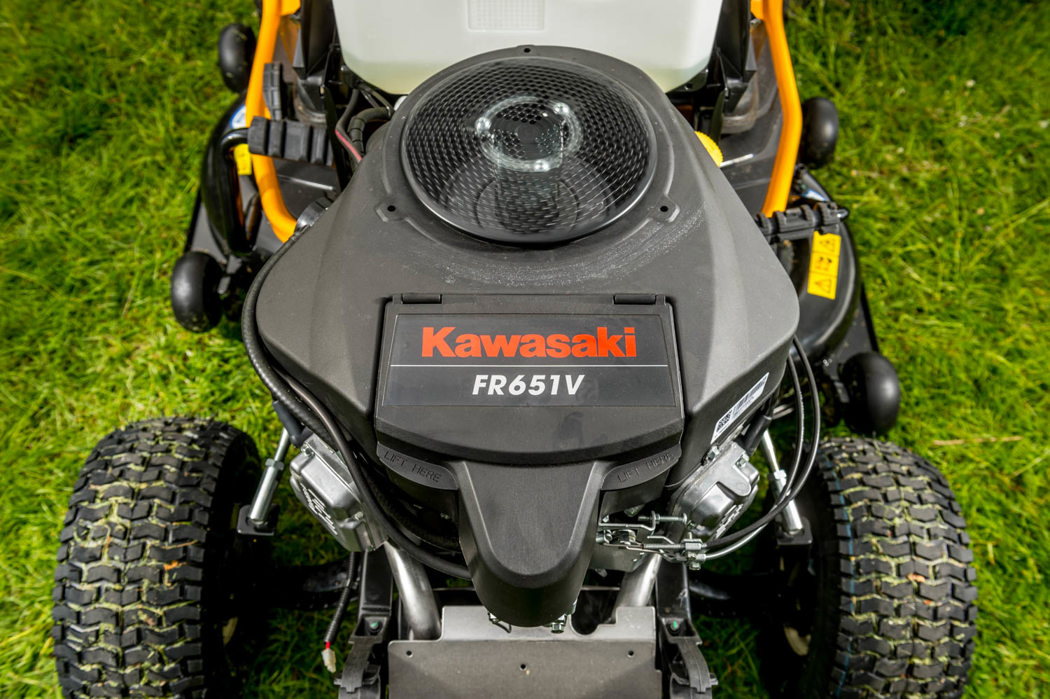
Reliable equipment for commercial lawn care
When lawn care excellence matters, few factors are more important than the equipment landscapers use to carry out key tasks in a commercial environment.
Whether powering commercial mowers, brushcutters, garden multi-tools or other professional equipment, Kawasaki engines deliver the reliable performance pro landscapers depend on day after day. Combined with industry-leading aftersales support, they help keep your equipment working at its best through every season – and demonstrate why Kawasaki is known for power, innovation, quality and reliability.
For more practical lawn care advice and engine maintenance tips explore our latest blogs and guides, or discover the range of Powered by Kawasaki machinery today.